








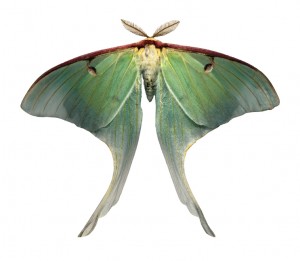
Researchers at the Agency for Science, Technology and Research (A*STAR) in Singapore have developed an anti-reflective film with nanoscale bumps that mimic the surface of a moth’s eye to maximise the amount of light transmitted through a glass sheet. The film is durable, robust and easy to produce, overcoming some of the main barriers to commercialisation.
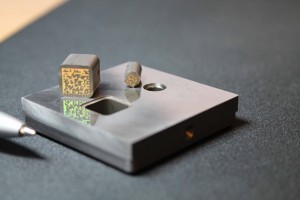
The new coating matches the optical properties of the best conventional anti-reflective coatings (ARCs). “We have fabricated robust and durable moth’s-eye-based anti-reflective nanostructures with broadband quasi-omnidirectional properties using polyhedral oligomeric silsesquioxane (POSS),” explains Dr M. S. M. Saifullah, Senior Scientist at A*STAR’s Institute of Materials Research and Engineering (IMRE). “POSS is a molecular cage built from silicon and oxygen atoms that gives chemical and mechanical stability and durability to the ARC.” The team mixed a modified version of POSS with three reagents — hexanediol diacrylate, heptadecafluorodecyl methacrylate and benzoyl peroxide — to form a resin that was then coated on glass and pressed with a nickel mold. Finally, they carried out thermal nanoimprint lithography at 130 degrees Celsius to achieve a hard ARC film featuring nanostructures that mimic the “nipple arrays” of a moth’s eye. The design was optimised using simulations. In addition to superior anti-reflective properties, Saifullah says the new coatings “have better transmittance over a broad spectral range and angles of incidence.”
To further optimise the POSS-based ARCs for commercialisation, Saifullah and his colleagues now have to overcome throughput-related challenges. “Our next plan is to use roll-to-roll and roll-to-flat UV nanoimprint lithographies for producing moth’s eye ARC structures over large areas on glass substrates,” the scientist says. In doing so, A*STAR hopes to attract potential corporate partners to IMRE’s newly launched Nanoimprint Foundry. He is confident his team’s discovery will have positive impact on future solar technologies. “Our ARCs not only have better transmittance over a broad spectral range and angles of incidence but also are robust and durable thus proving their potential for extensive applications in outdoor optoelectronic equipment, solar cells, etc.”
The research is detailed in the article “Robust and durable polyhedral oligomeric silsesquioxane-based anti-reflective nanostructures with broadband quasi-omnidirectional properties,” published in Energy & Environmental Science.
Written by Sandra Henderson, Research Editor, Solar Novus Today
 Back to Features