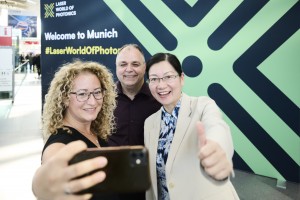












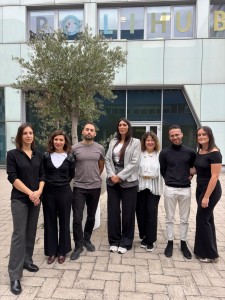
In this interview, Antonio Castelo (AC), EPIC’s Technology Manager for Bio-Medical and Lasers, talks to Maria Chiara Ubaldi, CEO at CareGlance, an Italian company specialized in customized optical sensors for industrial process monitoring.
What’s the background to you founding CareGlance as CEO?
After doing an MSc and then a PhD in Electronic and Telecommunication Engineering at the Polytechnic University of Milan, I spent the following 20 years working in the photonics industry, first as a researcher and later as a manager. I worked in R&D for large companies like Pirelli Labs, smaller companies like PGT Photonics, and my last role was as Principal Investigator and member of the executive board at Fondazione CIFE, a foundation focused on photonics-based research for renewable energy applications.
In 2019, I decided to change direction and start my own company, CareGlance, a deep-tech company initially focused on the healthcare market. My aim was to develop a compact, ultrafast, cost-effective swept-source laser for optical coherence tomography (OCT), an imaging technique that uses low-coherence light to capture micrometer-scale 3D images for non-invasive medical diagnosis.
How has the company developed?
After a couple of years, we realized that the reliable 3D images generated by our real-time sensor technology were ideal for industrial process monitoring in additive manufacturing, welding, and surface quality inspection of materials like ceramics, polymers and metals, particularly in the aviation and automotive sectors. In 2022, we strategically pivoted from healthcare to the industrial market.
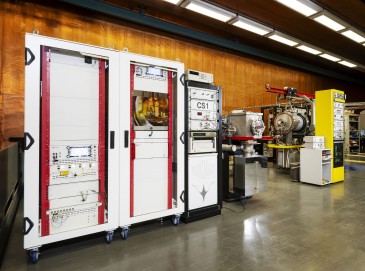
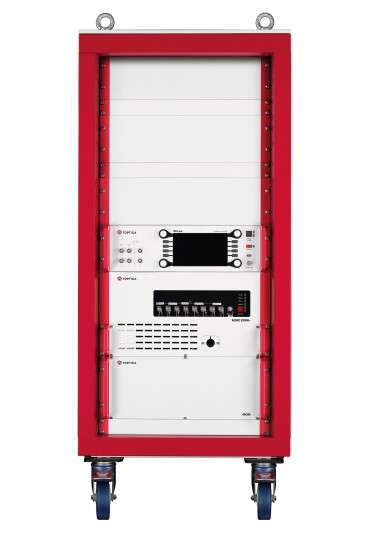
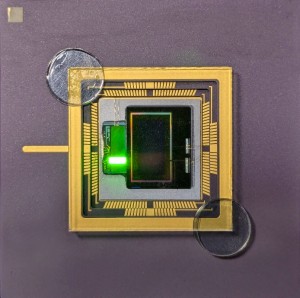
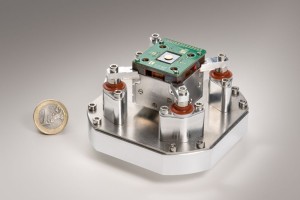
Since then, we have focused on developing a full-stack optical sensor designed to enhance quality and efficiency in industrial monitoring. Unlike off-the-shelf solutions with fixed performance parameters, our architecture allows full customization of sweep speed, wavelength range, and the satellite sensing head. At the heart of the system is the Satellite Box, fully customizable and designed to be installed directly on the customer’s process machine. It captures the light from the sample and transfers it to the Core Box, which processes the signal and sends the data to the computer. There, our proprietary algorithm reconstructs high-precision images, turning invisible details into actionable insights.
Up to today, we have raised nearly €3M and are on the way to completing a €3.5M Round A. With a team of six people, we are still in an advanced R&D stage, planning to launch a minimum viable product during 2026.
Did you find any challenges in managing the finances?
MCU: I learned many useful lessons about financial management during my time at Pirelli. The first was understanding cash flow and continuously monitoring budget and forecasting, something that has helped me enormously in my current position. If you don't carefully plan and observe your cash flow, even the best ideas fail.
What challenges have you faced being a woman in a predominantly male environment?
As regards representing your company to VCs, as a woman you often need to be twice as competent to be taken seriously. The deep-tech industry has traditionally been led by men, and unfortunately I still see this in younger startups where chief roles are mainly occupied by men, while administrative roles are often assigned to women.
Hopefully, as more women study STEM subjects, the number entering the deep-tech industry will increase. However, there will still be challenges in ambition and aspiration: while the idea of becoming a CEO feels natural for many men from a young age, for women it often emerges later in life.
Who are your main customers and how do you find them?
MCU: We are interested in end-users in additive manufacturing, welding, and manufacturers in the industrial, aviation and automotive sectors. We also target system integrators, such as manufacturers of welding heads. One way of finding these customers has been by attending exhibitions in the sector and contacting companies directly to check their interest in trial samples. Networking in person has also been very valuable — and in this respect EPIC has played an important role for us. We have also analysed the web to monitor trends and benchmark competitors.
In relation to technological development, how early should a startup approach customers?
MCU: The important thing is not to miss the time-to-market window. In our case, we started promoting brand awareness almost two years ago, before demonstrating a proof of concept, introducing CareGlance to prospective customers and communicating our mission. We also changed our logo and visual identity — all part of building visibility. It’s difficult to forecast when your prototype will be ready, but you need to start networking at least one year in advance to promote your name to both customers and VCs. In our case, our storytelling was convincing, because the €3 million investment we received was based on reputation, not on a product.
What’s your advice regarding selecting investors?
MCU: For our first investment round we spoke to tens of VCs. Before this, we pre-selected those with a real interest in deep-tech. It was a long journey because many were focused primarily on AI-driven trends. The second challenge was that deep-tech startups like CareGlance require time to develop sellable products, so we needed long-term sustainable investment, which was difficult to find. For these reasons, it was a lengthy process, and my advice is to start looking for investors as early as possible.
How useful have you found participating in EU projects?
MCU: We have only applied for one EU project. We spent considerable time preparing the business plan, and in the end we were not selected. The decision is usually taken by several experts, and if even one reviewer scores you low, the entire proposal may be rejected. It would be interesting for CareGlance to join a partnership to develop a sensor for a specific manufacturing application at a European level.
Do you have any advice on hiring and team building?
My approach is to be transparent from the beginning. At interviews, I always explain that working for a startup is a double-edged sword. While there are opportunities to grow, the inherent risks of a fast-evolving environment are not negligible. Successful candidates therefore need to be enthusiastic, resilient, and equipped with both hard and soft skills aligned with CareGlance’s vision and strategy.
You may have a wonderful idea, but if your team is not motivated and there is no open dialogue with management, it will fail. For this reason, in 2021, I introduced periodical social activities to give employees the opportunity to connect and develop a strong team spirit.
If you started again, what would you do differently?
Looking back, I would integrate an MVP mindset earlier, but I wouldn’t reduce our R&D journey.
Deep-tech needs time. Innovation needs patience.
Those years allowed us to create a sensor that stands apart.
If there is something I have learned, it is that timing is everything: know when to explore, and know when to deliver.
CareGlance is now in that delivery phase, and I am proud of that — together with the whole team.
 Back to Features