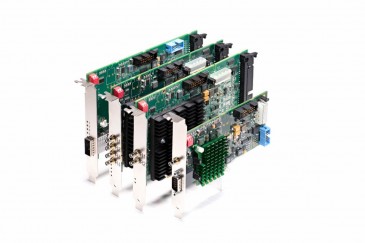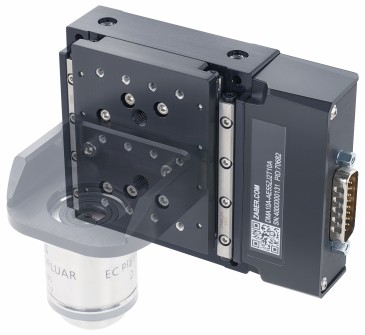







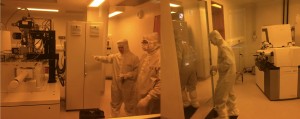
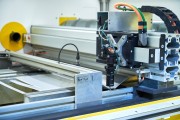

Motion control specialist Aerotech is significantly expanding its capacity at its Fürth site. In addition to setting up a state-of-the-art laser laboratory, assembly of controls and drive products will also take place there in future. The company is creating a European centre for the development, testing and validation of laser-based manufacturing processes and for the customer-oriented assembly of motion components.
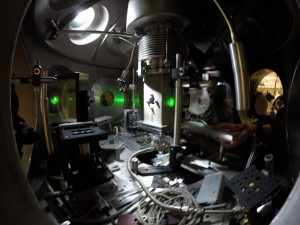
Aerotech has been developing high-precision positioning and automation systems for applications in semiconductor technology, laser processing, medical technology and other high-tech industries for more than 50 years. The newly built laser laboratory in Fürth offers customers from all over Europe the opportunity to test and optimize laser-based manufacturing processes directly on site using Aerotech products. The aim is to demonstrate applications under realistic conditions and to further develop them together with customers. In the long term, the laboratory is intended to serve as a European centre of excellence for micromaterial processing.
New manager for laboratory setup and customer trials
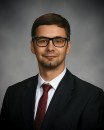
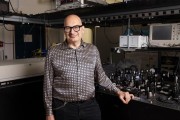
The laboratory is headed by Dipl.-Ing. Oliver Hentschel, who has more than twelve years of scientific experience in laser and photonics research. He studied physical engineering (Dipl.-Ing.) and applied physics (M.Sc.), deepening his expertise in optics and laser technology early on. As a research assistant at the Chair of Photonic Technologies at Friedrich-Alexander University Erlangen-Nuremberg (FAU) and at the Bavarian Laser Centre (BLZ), he worked on a wide range of laserbased material processing techniques – from classic laser beam welding and additive manufacturing (e.g. directed energy deposition) to high-precision micromaterial processing with ultrashort pulse lasers (UKP).
At the Fürth site, Hentschel is now responsible for the technical expansion of the laboratory as well as the planning and execution of customer trials. Here, users can test Aerotech components directly in combination – from laser scanners to multi-axis systems to controllers – and thus gain a practical impression.
High-tech core: ultra-short pulse lasers from Light Conversion
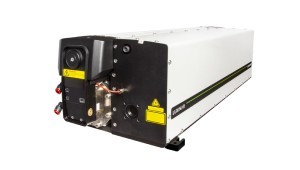
The centrepiece of the laboratory is an ultrashort pulse laser system from longstanding partner Light Conversion. The company is regarded worldwide as a pioneer in femtosecond lasers and laser systems and opened a new 400-squaremetre R&D laboratory in Silicon Valley in 2025. The cooperation with Aerotech includes the provision of a customised laser scanning and motion control system for demanding applications in semiconductor, electronics and medical device manufacturing.
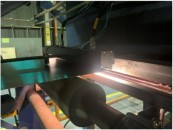
An 80 W carbide laser with a harmonics module is used, providing wavelengths of 1030 nm, 515 nm and 343 nm. With minimum pulse durations of around 250 fs, micro-machining processes with very low thermal input can be achieved. The very short pulses result in "quasi-cold ablation" of the material, minimising thermal stress and allowing sensitive materials to be processed without microcracks or burr formation. Combined with precise axis systems and laser scan heads from Aerotech, users can test a wide variety of materials – from metals to semiconductor materials to glass – under realistic production conditions.
"Users can check directly with us whether and how a desired application can be implemented," reports Oliver Hentschel. "Feasibility studies, process optimisations and test series are carried out in the laboratory under realistic conditions. This significantly reduces any risks involved in the transition to industrial production. After consultation, smaller start-up series can also be produced here to validate transferability to series production."
Wide range of applications
The system available in the laser laboratory allows numerous applications from micro and precision machining to be achieved. Typical fields of application can be found in industries such as:
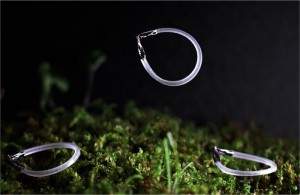
- Medical technology: Manufacture of precision implants and instruments (e.g. stents, catheters, eye surgery)
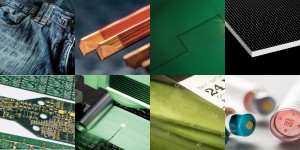
- Semiconductor and microelectronics manufacturing: structuring, wafer processing and material trimming
- Aerospace: functional microstructures and high-precision components
- Automotive and mechanical engineering: surface functions and fine structures
- Research institutions: validation of new process approaches
Process control is handled by the Automation1 automation platform, which provides functions such as Position Synchronised Output (PSO) and Infinite Field of View (IFOV). This allows large-area structures to be created without changing paths or stitching, which, in combination with the multi-axis systems, enables consistent precision.
For measurement of samples produced a Keyence VHX-X1 digital microscope equipped with three lenses is available. The maximum adjustable magnification with the lens is 2000x. Another advantage is the positioning tables (x, y, z) used and the ability to tilt the microscope head flexibly depending on the object being measured.
As a long-standing Keyence partner, Aerotech subsidiary Peak Metrology already has the necessary experience for automation at this level of precision offering flexibility of increased travel range and custom software interface.
Proximity to European industries
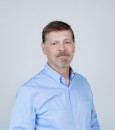
The laboratory strengthens Aerotech's presence in Europe. Until now, customer specific test series have mainly been carried out in the USA. The new location enables shorter distances, direct coordination and flexible scheduling. "Many companies want to not only develop their processes theoretically, but also verify them in conjunction with real systems," explains Stephan Schech, Managing Director of Aerotech GmbH. "The new laser laboratory in Fürth creates the right environment for this and makes collaboration with customers much easier." The laboratory is connected to the existing facility. Application support, service and test series are thus provided from a single source.
Assembly of components at the Fürth site
In parallel with the laboratory operations, Aerotech is setting up its own assembly line for drive and controller components in Fürth. "The demand for customer-specific designs is constantly increasing," explains Stephan Schech. "That's why we are expanding our on-site capabilities so that we can respond much more flexibly to different requirements in Fürth in the future." For users, this means shorter delivery times, greater responsiveness and better coordination between application, testing and delivery.
Further expansion planned
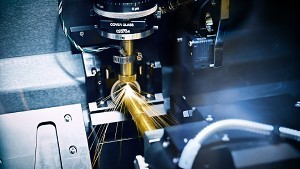
Up to four machines can be operated in a laboratory area of around 50 square metres. A complete system is planned for the start, and the equipment is to be continuously expanded over the next two years. Among other things, there are plans to install a tube cutter or stent cutter system to test the transferability of the processes to series production.
"The laser laboratory is set to become a permanent point of contact for industrial users," emphasises Oliver Hentschel. "We want to shape the future of manufacturing together with our customers and offer a platform that makes technical developments testable, traceable and resilient. The aim is to make the laboratory a European centre of excellence for micro material processing." With its combination of development environment and local assembly, Aerotech is creating a location in Fürth that closely links engineering, practical testing and manufacturing. The result is a technical centre that supports European customers from the initial idea to validated implementation.
 Back to News