














In this interview, Antonio Castel, EPIC’s Technology Manager for Bio-Medical and Lasers, talks to Francesco Crisafi, Interim CEO and CTO at Cambridge Raman Imaging, an Italian company developing high-speed, label-free imaging systems for tissues and cells, using advanced laser and spectroscopic techniques.
What’s the background to your appointment as interim CEO at Cambridge Raman Imaging?
In 2018, after doing an MSc and then a PHD in Physics at Politecnico di Milano, I began my career outside academia working at Zurich Instruments as an application scientist providing technical sales and support for the lock-in amplifiers market.
 Before that, and after my PhD, I worked as a research fellow at the University of Zurich, and and after two years in Switzerland, I decided to move back to Italy. In 2019, I joined Bright Solutions as a laser engineer, working on picosecond and femtosecond short-pulse generation in fiber and solid-state lasers for scientific and industrial applications. Although the work was interesting and I learned a lot about how to develop good lasers and industrial-grade products, Bright Solutions was a small company, and after 18 months I felt the need to broaden my horizons.
I discovered that Giulio Cerullo, my former PhD professor, and Andrea Ferrari were looking for a lead engineer to join Cambridge Raman Imaging (CRI), a company they had founded in 2018 to introduce fiber lasers to the biomedical market. They were happy to take me on because my PhD experience in system engineering was a good fit for CRI. In 2019, I joined CRI as lead engineer. After a couple of years, I became R&D manager, then CTO in 2024, and since July 2025 I’ve been interim CEO.
How has CRI developed?
CRI was set up as a spin-out from the University of Cambridge and Politecnico di Milano, to develop high-speed, label-free imaging systems for tissues and cells using advanced laser and spectroscopic techniques. The core technology is based on coherent Raman scattering (CRS) spectroscopy, which can probe the chemical composition of biological samples instead of relying solely on visual cues and external labelling.
A major landmark for the company was in 2022 when we were selected to coordinate CHARM, a €2.5 million EU project under the European Innovation Council’s (EIC) Transition call, aimed at transforming cancer diagnosis and treatment. In the same year, we raised almost 1.3 million euros in a pre-seed round. This enabled us to start recruiting and we now have a workforce of 12.
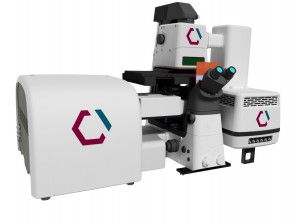
Since 2018 we’ve strengthened our IP by creating proprietary patents and we’ve developed three main products: CORAL, a multimodal label-free sub-cellular resolution imaging platform for spatial biology; CHAMP, an optical spectrometer based on our proprietary multi-channel lock-in technology; and STRALE, a patented passively synchronized dual-output fiber laser. CORAL (based on STRALE and CHAMP technology) form one powerful system designed to reveal the chemical make-up of cells and tissues, especially tumours, without using dyes or stains. The system also incorporates digital/AI support for faster and more accurate diagnosis, cellular process analysis, drug discovery, and therapy assessment.
How was CRI initially funded?
CRI began with two private investors, owners of a microscopy firm, who believed in our vision and provided early support. From the very beginning, we actively pursued funding opportunities by writing and applying for grants at national, regional, and European levels. In the initial phase, we were partially hosted at the Cambridge Graphene Center and in the laboratories of Prof. Cerullo at Politecnico di Milano, which gave us access to world-class facilities and expertise.
We were also supported by Frontier IP, a UK-based specialist in commercializing university research. They helped us in developing the IP and supported us with interim C-level roles, as well as creating connections with relevant people in the industry and angel investors.
What challenges have you had with recruitment?
For a startup, recruitment is tricky because one person can have a huge impact. With a workforce of 10, one new employee represents a 10% increase; with five employees, it’s 20%. Making the wrong decision can have major repercussions. However, I haven’t spent much time on recruitment itself. What’s been more important is building an effective team. Over the past few years, I’ve focused on being a good leader and scientist, motivating the team so people can grow internally and we can successfully develop complex products involving optical fibers, lasers, electronics, and multi-channel lock-in technology at the cutting edge of science.
What advice do you have for startups wanting to enter the medical market?
A big challenge in the medical sector is that it takes a long time and a lot of money to achieve compliance. Before launching a product, you must be 100% sure it works. From my experience and what I’ve learned from venture capitalists, it’s advisable to develop dual-use technology. VCs like dual-use technology because it can be applied in both medical and industrial contexts. In our case, these include characterization of bulk semiconductors and layered materials, detection of environmental and food contaminants, and analysis of degradation processes in batteries.
If you started again, what would you do differently?
I might make a few adjustments, but they wouldn’t have a major impact because I truly believe the products we’ve built over the past five years are remarkable-especially considering the resources we had available.
PRODUCT PHOTO: “CORAL, the coherent Raman platform developed by CRI. A multimodal microscope with sub-micron resolution for high-end research in pharma, medical and industrial applications; able to capture the full morpho-chemical content of a sample without the need of any external labelling.”
 Back to Features