









Alluxa, Inc., a global leader in high-performance optical coatings, filters, and thin-film deposition technologies, has been recognized by NASA as one of the companies that provided critical components for the telescope’s Wide Field Instrument (WFI), the observatory's primary science instrument.
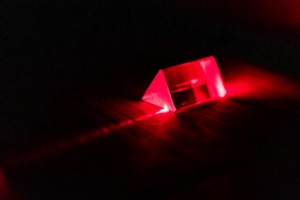
The WFI is a 300-megapixel visible-to-NIR imaging camera and slitless spectrometer. Alluxa manufactured precision optical coatings for the WFI’s Prism, Grism, and eight science filters, enabling exceptionally accurate wavelength selection required for the mission's ambitious scientific objectives.
The Roman Space Telescope's Wide Field Instrument will provide an unprecedented view of the cosmos, capturing images with a field of view dramatically larger than that of the Hubble Space Telescope. This capability will allow scientists to survey vast regions of space more efficiently, opening new opportunities for discovery and exploration.
The optical components developed for the mission reflect years of expertise, innovation, and dedication from the Alluxa team. The successful launch represents a significant milestone for those who contributed to the effort and highlights the role advanced optical technologies play in enabling next-generation scientific research.
"We are incredibly proud that Alluxa's technology is contributing to a mission of this magnitude," notes Peter Egerton, president of Alluxa. "The Roman Space Telescope represents an extraordinary achievement in science and engineering, and it is an honor for our team to have played a role in supporting the Wide Field Instrument and the discoveries it will enable."
This achievement underscores how Alluxa’s technologies continue to contribute to some of the world's most advanced scientific and aerospace programs.
Photo: A SpaceX Falcon Heavy rocket with NASA's Nancy Grace Roman Telescope on board is seen transiting the sun during launch from Launch Complex 39A, Sunday, Aug. 30, 2026, at NASA's Kennedy Space Center in Florida. CREDIT: NASA/John Kraus
 Back to News